What It Does
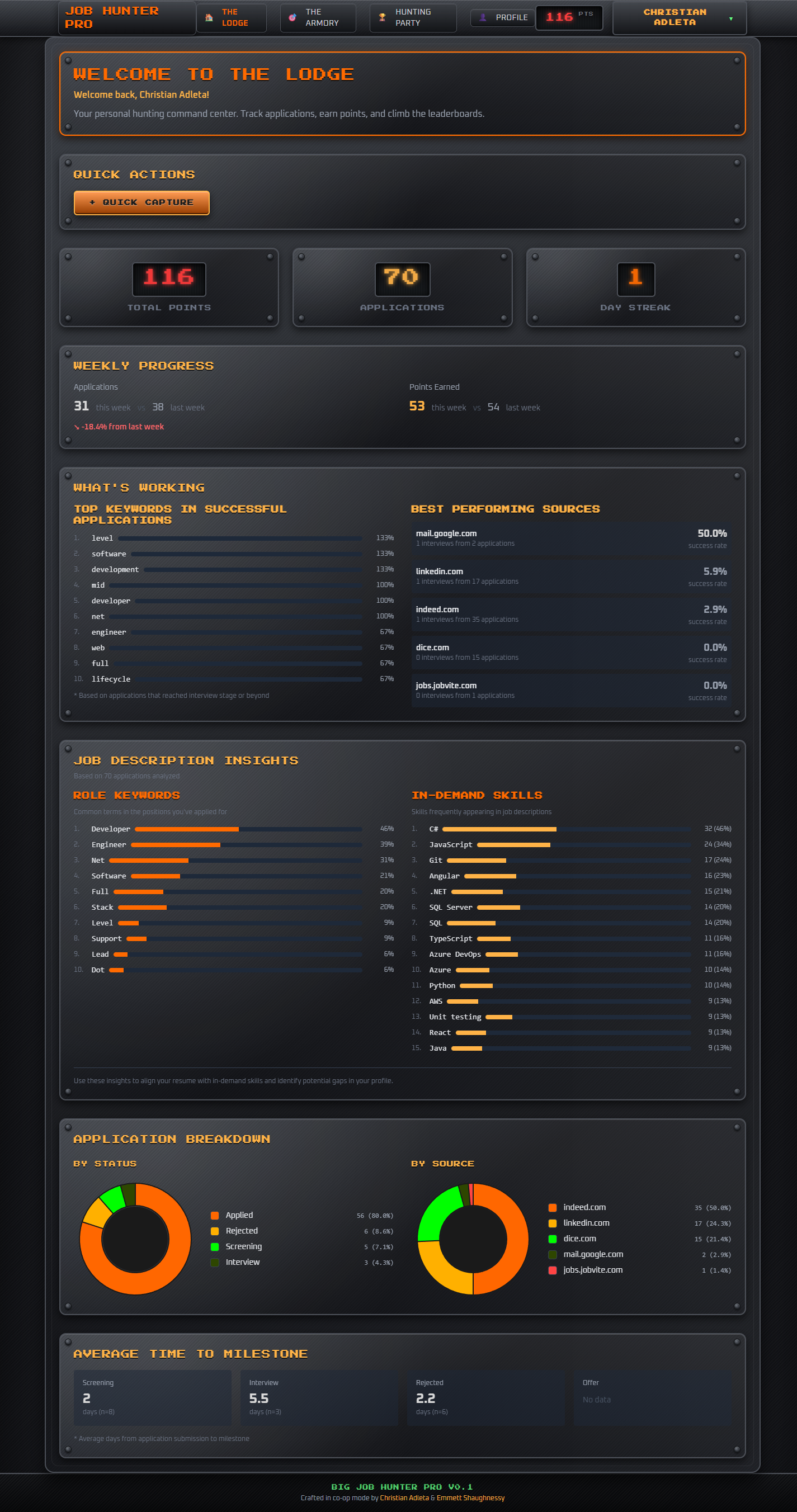
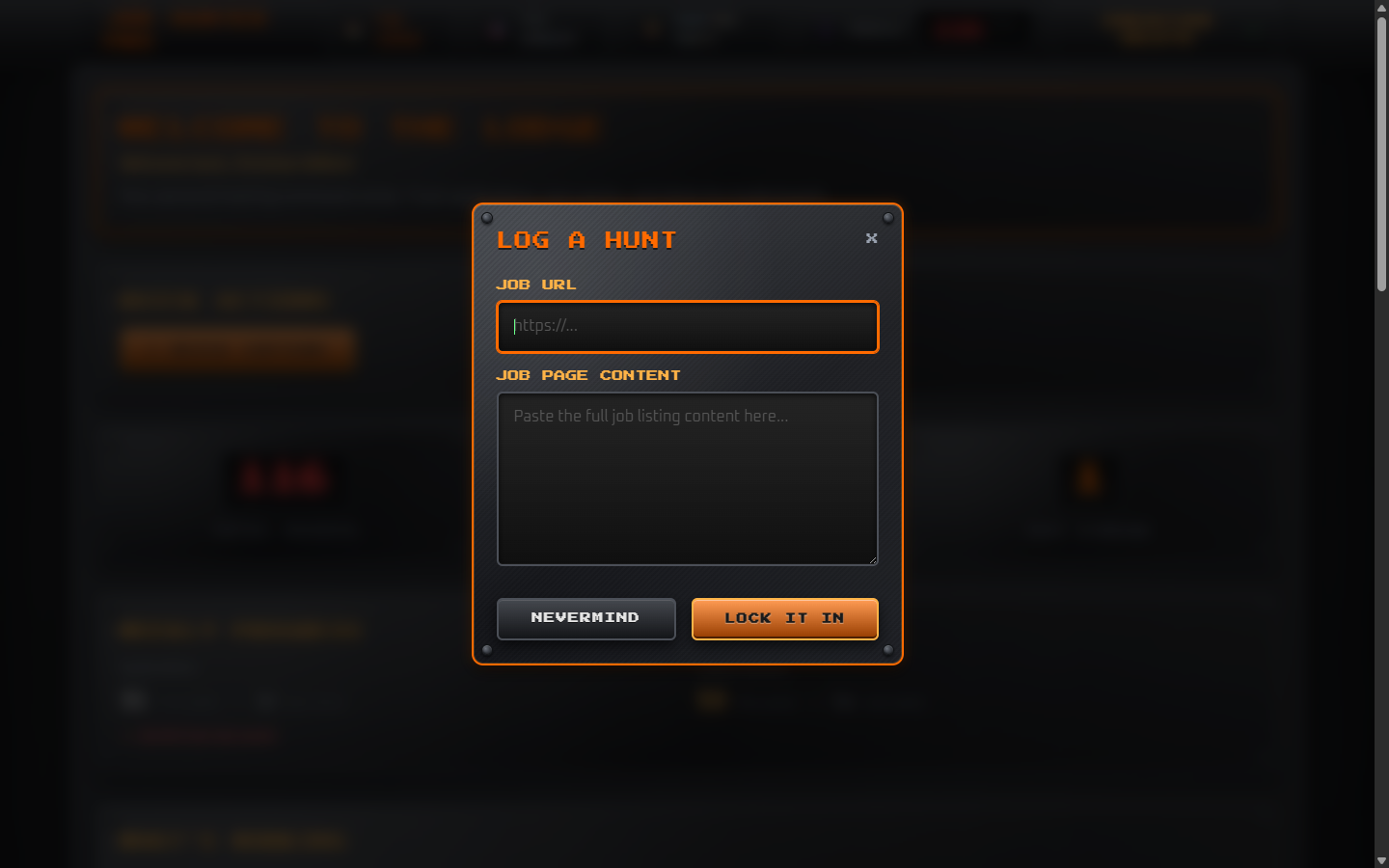
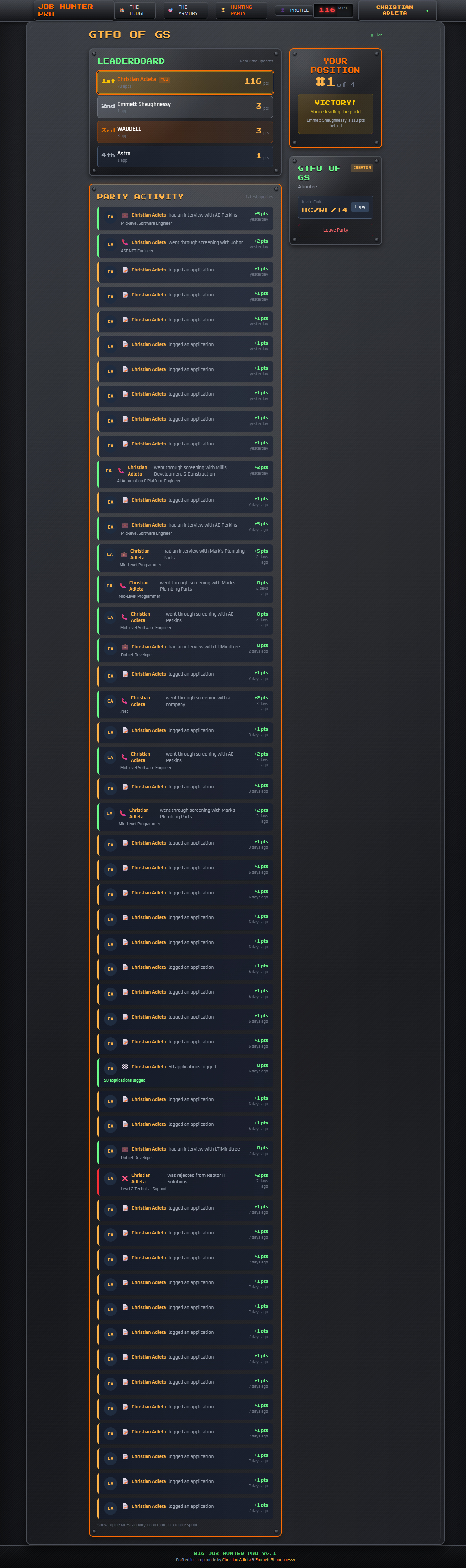
- Log job applications in 15 seconds with streamlined entry forms
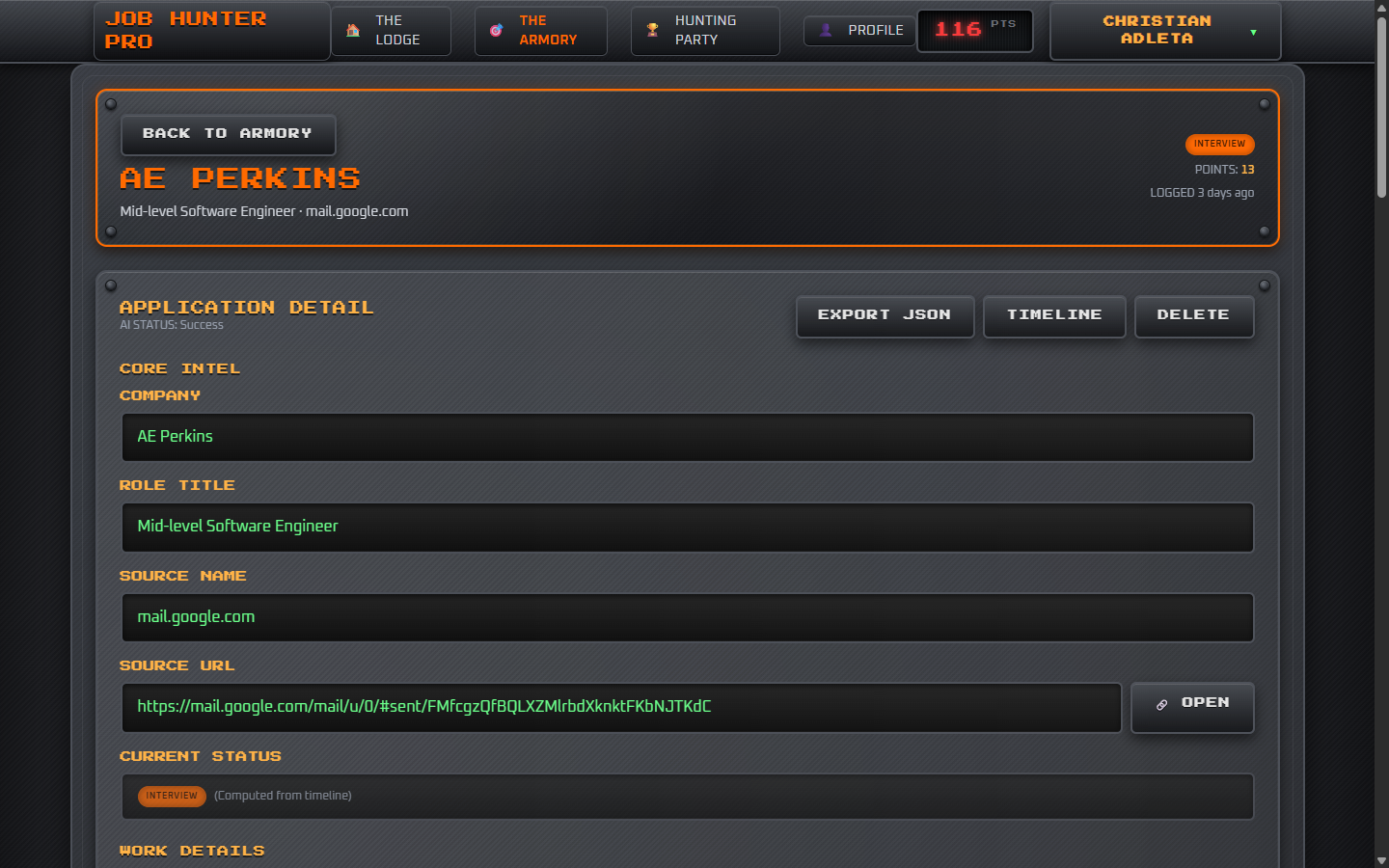
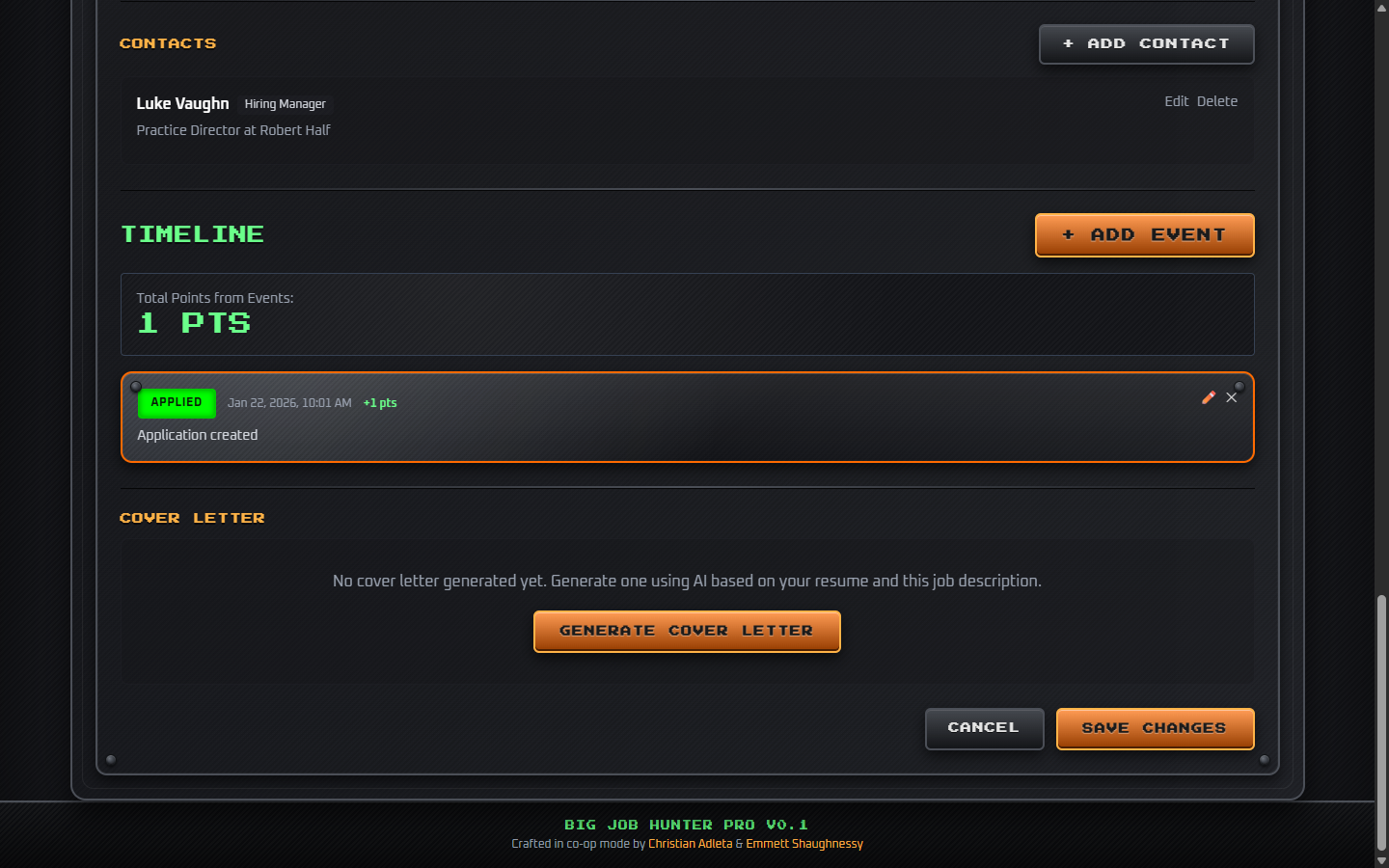
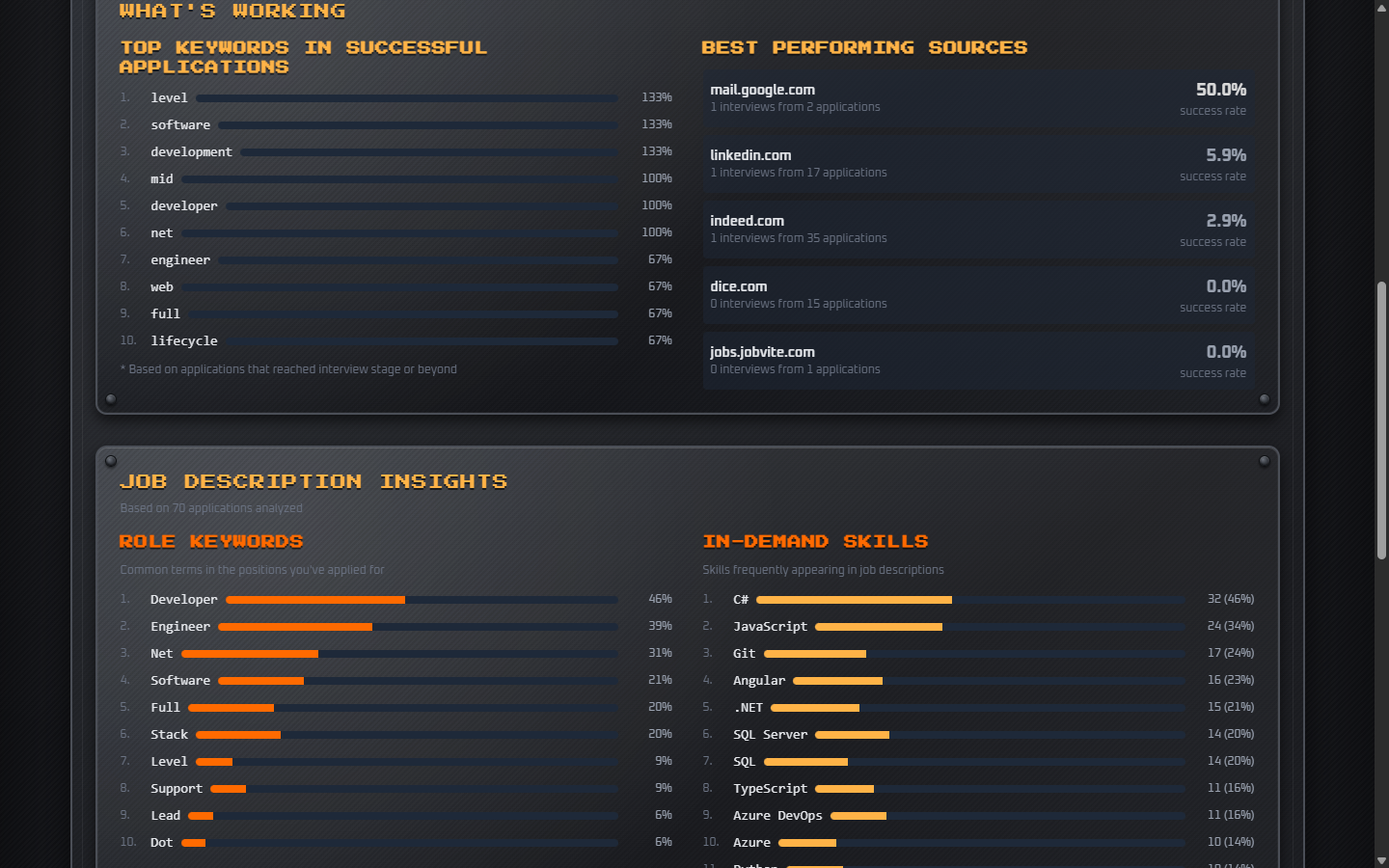
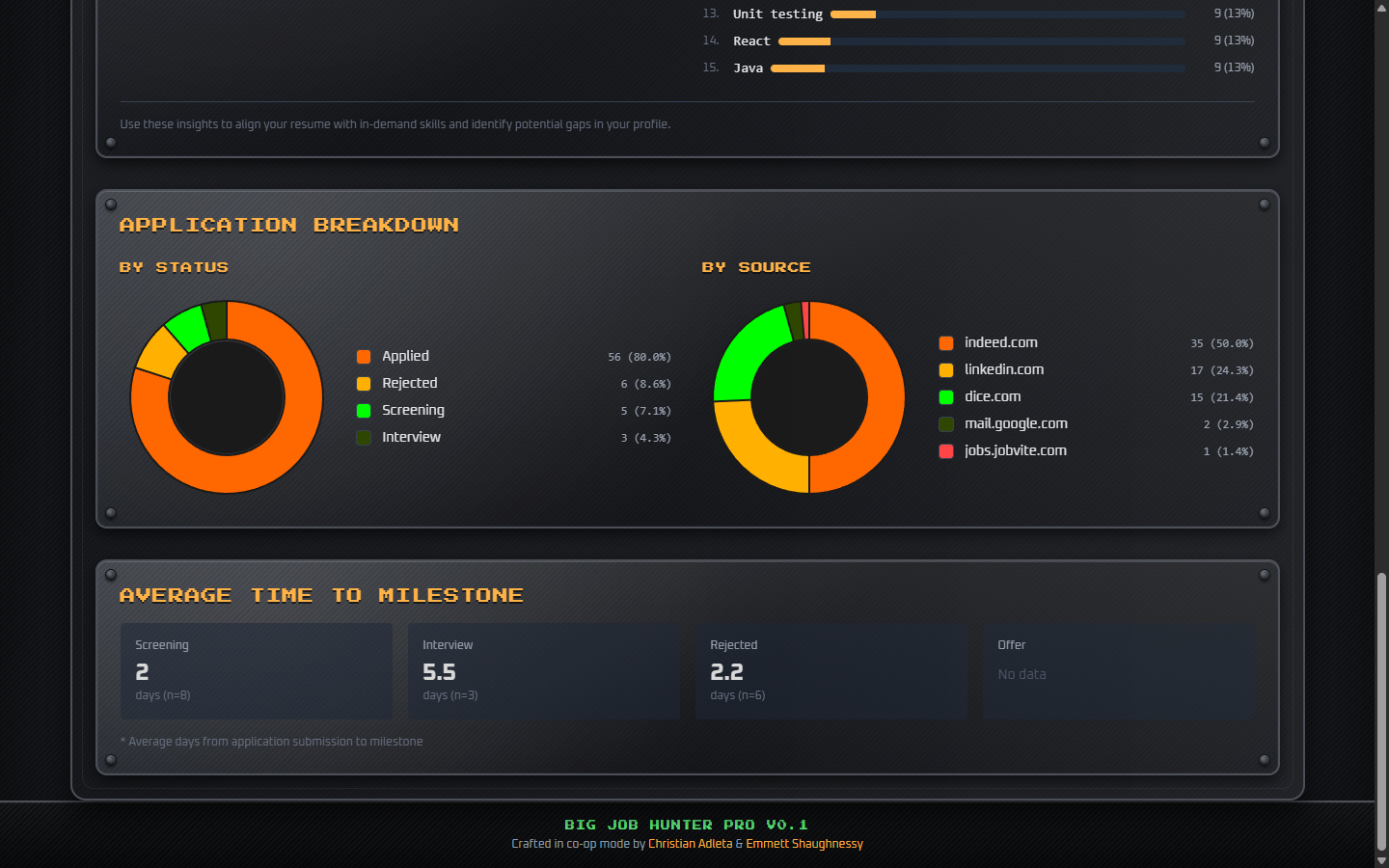
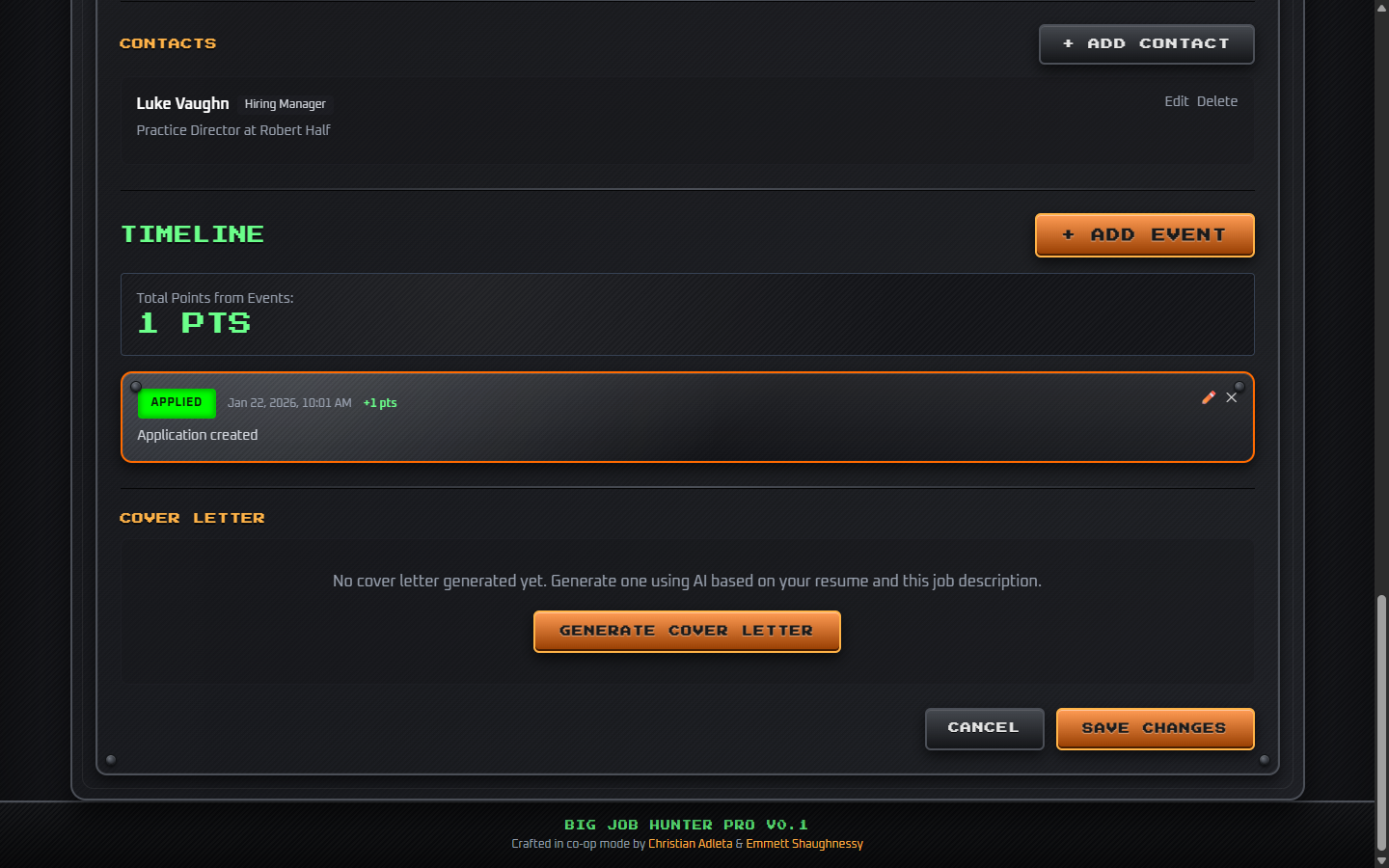
- Score points for every interview and track progress through the hiring pipeline
- Build daily streaks to maintain momentum during the job search
- Compete on social leaderboards with other job seekers
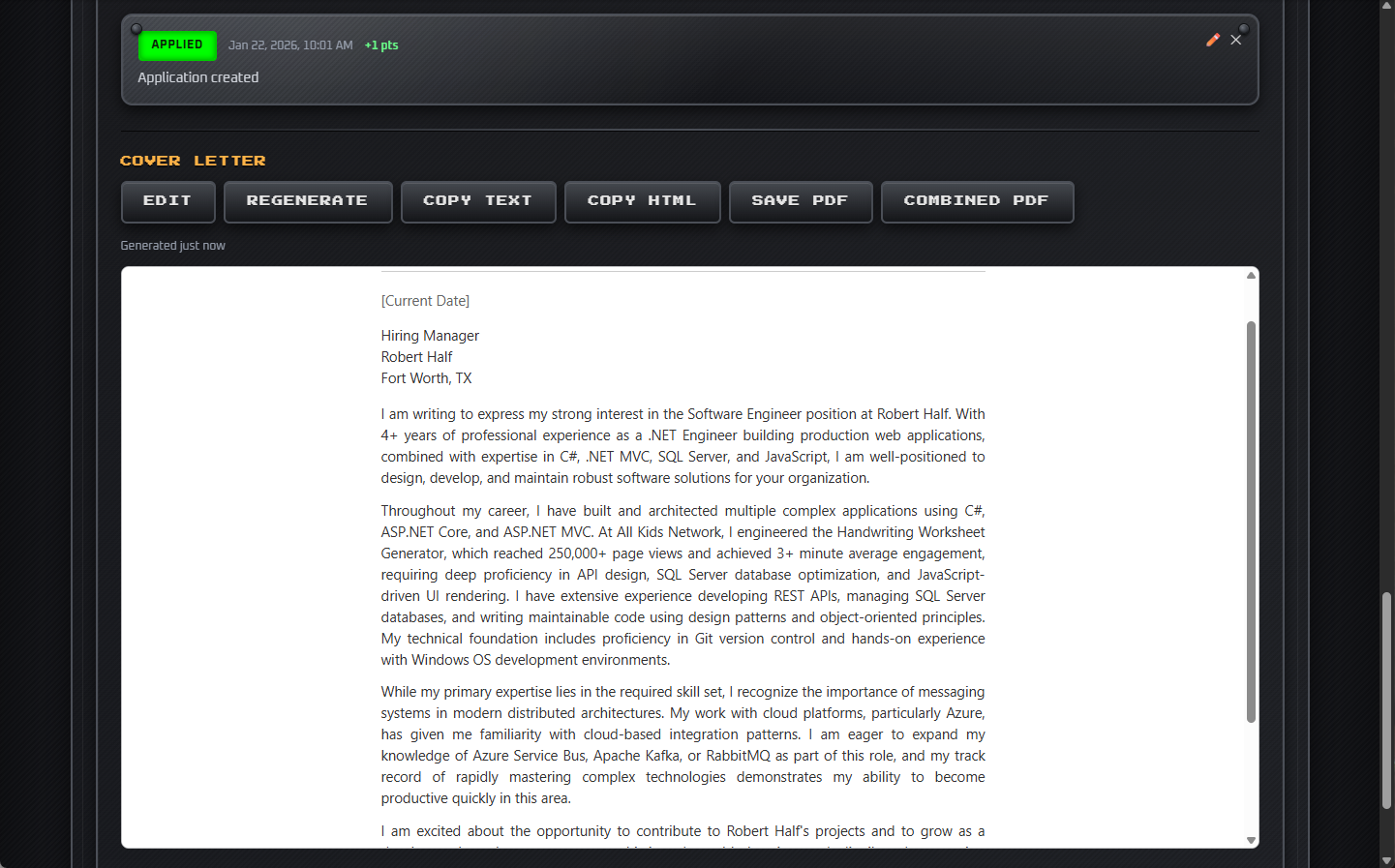
- Track application status through a retro arcade-inspired interface
- Secure authentication with JWT tokens and user profile management
Why I Built This
Job searching is draining. You send out dozens of applications into the void, rarely hearing back, and it's hard to stay motivated. I wanted to transform that grind into something more engaging—a game where every application is a power-up, every interview is a boss battle, and progress is visible and rewarding.
The arcade aesthetic isn't just nostalgia—it's intentional. Classic games were designed to keep you coming back, to make incremental progress feel meaningful. I applied those same principles to job hunting: quick logging, immediate feedback, streak mechanics, and competitive leaderboards to turn a solo struggle into a shared challenge.
How It Works
The frontend is built with React 18 and TypeScript, bundled with Vite for fast development. Tailwind CSS provides the retro arcade styling with custom color schemes and pixel-art inspired components. React Router v6 handles navigation and React Context API manages global state for authentication and user data.
The backend is an ASP.NET Core 8 Web API following Clean Architecture principles. Entity Framework Core handles data persistence with MS SQL Server/Azure SQL. Authentication uses ASP.NET Core Identity with JWT tokens for secure API access. The clean architecture pattern separates concerns with distinct layers for domain logic, application services, infrastructure, and API presentation.
Impact
By the numbers:
- 123 commits to the main branch showing active development
- Full-stack application with React frontend and ASP.NET Core backend
- 15-second application logging target for minimal friction
- Complete authentication system with user profiles
What changed:
- Transformed tedious application tracking into an engaging game-like experience
- Made job search progress visible and rewarding with points and streaks
- Created a social element through leaderboards to reduce job search isolation
- Reduced friction in logging applications to maintain consistent tracking
Challenges & Solutions
The biggest challenge was balancing gamification with utility. Too game-like and it feels trivial; too utilitarian and you lose the motivation boost. I solved this by keeping the core functionality straightforward—rapid application logging with essential fields—while layering the game mechanics on top as optional engagement features.
Another key decision was the tech stack. Using Clean Architecture on the backend provides long-term maintainability and testability, even though it adds initial complexity. The separation of concerns means I can swap out infrastructure components (like switching from SQL Server to PostgreSQL) without touching business logic.
What I Learned
This project deepened my understanding of full-stack architecture patterns, particularly Clean Architecture in .NET and how to structure a React app for scalability. I also learned that gamification isn't just about points and badges—it's about understanding what drives behavior and designing feedback loops that sustain motivation over time.
Future improvements:
- Add interview preparation features with question banks and practice timers
- Implement email/calendar integration to auto-track interview appointments
- Create data visualizations for application success rates and response times
- Add team/cohort features for job search groups or bootcamp cohorts
- Build mobile apps for iOS and Android using React Native
Links
- Live Demo: bigjobhunter.pro
- Code: GitHub