What It Does
LegoZombieKing is a YouTube channel that delivered fun and informative mobile gaming content from 2015 to 2023. The channel served casual gamers with bite-sized videos on iOS apps and games, combining quick app reviews with step-by-step game tutorials.
- Weekly "Free App of the Week" reviews covering Apple's rotating promotion while it lasted
- 60-second app review clips distilling an app's value into rapid-fire commentary
- Mobile game tutorials demonstrating how to unlock secret vehicles and achievements
- Gameplay highlight reels from popular mobile and PC games
- Thematic playlists organizing content by series for easy binge-watching
- Consistent youthful presentation with energetic commentary and simple editing
Quick Facts
- What it is: A YouTube channel sharing mobile game tutorials and iOS app reviews for entertainment and learning
- Who it's for: Casual gamers and app enthusiasts (especially younger viewers) looking for quick reviews and gameplay tips
- My role: Solo content creator – planning, screen recording, voiceover, and editing every video myself
- Timeframe: 2015–2023 (started at age 13, now largely archived)
- Notable outcome: Grew to ~950 subscribers and ~461K views, with a viral tutorial surpassing 234K views and earning enough ad revenue for a high-end Xbox controller
Why I Built This
I started LegoZombieKing in July 2015 as a 13-year-old middle schooler inspired by YouTube gamers making a living playing video games. I was captivated by creators like DanTDM who seemed to do what they loved every day. After watching his advice video about starting a YouTube channel, one message stuck with me: it took him about 5 years to get where he was, so the sooner you start, the sooner you can reach your dream.
That advice lit a fire under me. If I started right then, I could potentially be a successful YouTuber doing what I loved before I was even in my 20s. Not a bad plan for a middle schooler. So I grabbed a camera, recruited my sister for my first video, and dove in headfirst.
For viewers, the channel filled a niche opportunity: quick mobile app reviews and game tips from a fellow young gamer. In the mid-2010s, Apple's Free App of the Week promotion offered a new free iOS app every week, but few YouTubers were covering these consistently. I aimed to help people decide if each week's free app was worth downloading. Similarly, in mobile games like Drive Ahead, players searched for how to unlock rare in-game items—a problem I tackled with short "how-to" tutorial videos.
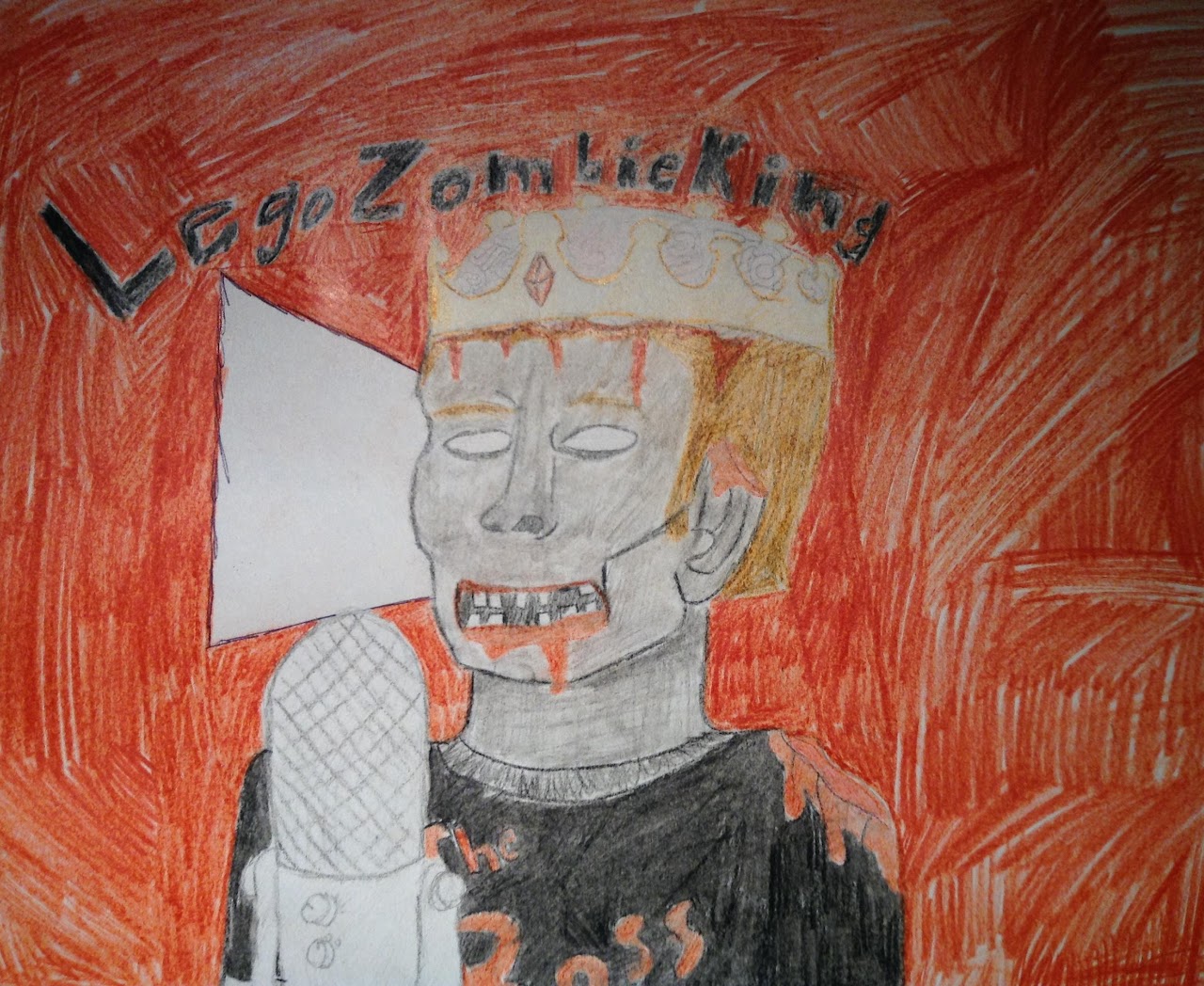 Early channel branding: a hand-drawn character that represented my gaming persona.
How It Works
From a production standpoint, LegoZombieKing was built on simple, self-taught workflows tailored to a one-person operation. I structured the channel around recurring series and playlists for clarity—all app reviews were grouped together, tutorial videos organized by game, making it easy for viewers to find exactly what they wanted.
Production workflow: I would capture gameplay using iOS screen recording or emulator software, and film any live segments with a basic webcam. Each video started with a simple script or outline—for app reviews, I'd list key features and my opinions; for tutorials, I planned the steps to demonstrate. I then recorded voiceover commentary, often ad-libbing to keep things natural and conversational.
After my family's honest feedback on my first unedited upload (they stopped watching because it was too long and unengaging), I became ruthless with editing. I trimmed out silence and filler, added background music from Incompetech's royalty-free library, and occasionally overlaid text or arrows to highlight on-screen details. Editing was done on lightweight software like iMovie—nothing fancy, but effective enough to keep viewers engaged.
Technical choices: Being a solo teen creator meant accepting some limitations. I prioritized quantity over perfection in the early days to practice and stay consistent. The weekly cadence during the Free App of the Week series was challenging, so I streamlined production by keeping videos short (often under 3 minutes) and formulaic: intro, content, outro. This made editing faster and matched the attention span of my target audience.
I learned to use YouTube features like end screens and cards to link related videos, and created eye-catching thumbnails using free design tools. YouTube's analytics and comment feedback informed my content decisions—I noticed which keywords or topics were drawing views and adjusted accordingly. When Apple discontinued the Free App of the Week in iOS 11, I quickly pivoted to game tutorials, demonstrating agility in content strategy.
Impact
By the numbers:
- Published 101 videos that amassed 461,000+ total views
- Grew to 952 subscribers at peak
- One viral tutorial video ("How to get the Space Bike" for Drive Ahead) reached ~234,800 views
- Several other videos achieved 20K–65K views each
- Achieved YouTube monetization and earned enough ad revenue to buy a high-end Xbox controller
What changed:
- Helped a niche audience: The channel filled a content gap for specific interests—viewers hunting for Drive Ahead secrets or curious about the week's free app found answers in these videos. Comments often expressed gratitude, indicating the content solved real problems for gamers.
- Community engagement: A core group of enthusiastic viewers would like and comment on new uploads, giving feedback and suggesting apps or games to cover. This interactive loop guided my content direction and created a sense of community.
- Personal development: Running this channel was a hands-on education. I taught myself video editing and production at a young age, turning criticism into motivation to improve. Each video made me more proficient in communication and injecting personality to keep things entertaining.
- Catalyst for opportunities: The experience laid the groundwork for future content creation. I later began creating content professionally for All Kids Network, leveraging skills honed on my own channel. The lessons from LegoZombieKing carried into new ventures like my podcast.
- Creative fulfillment: The satisfaction of seeing any audience enjoy my content was huge. Small milestones—reaching 100 subscribers or celebrating a video crossing 1,000 views—made the journey rewarding beyond just money.
Challenges & Solutions
Engagement and editing: My biggest initial challenge was making videos engaging. My first attempt (filmed with my sister) turned out long and unengaging—even my family lost interest after a few minutes. I tackled this by diving into self-learning video editing, trimming clips aggressively and adding music and captions to improve pacing. This was pure trial-and-error; I even re-edited that first upload after seeing the reaction, cutting it down to just the fun parts.
Technical hurdles: Without a budget for fancy gear, I had to improvise. Recording mobile screen output was tricky in 2015; I found software workarounds and dealt with occasional crashes. Editing on a basic laptop meant waiting through long render times. Instead of high-end cameras, I used what I had (sometimes stacking books to hold a phone as a tripod). These limitations taught me to be resourceful—focusing on content and narration rather than flashy production.
Standing out in the algorithm: I learned to lean into timeliness and SEO, framing titles with relevant keywords (like "Free App of the Week Review iOS" or specific game item names) to capture search traffic. When Apple's app program ended, I quickly made a video addressing the change, which got a couple thousand views by tackling a timely question.
Content strategy shifts: A significant challenge came when Apple discontinued the Free App of the Week in 2017—one of my content pillars disappeared overnight. I adapted by doubling down on game tutorials and looking for other app-related series. As I got older and my interests changed, I gradually transitioned the channel to an archive rather than forcing myself to continue a formula that no longer excited me.
Consistency vs. burnout: Managing school and a YouTube upload schedule as a teenager was tough. I initially overcame this by batching recordings and creating simple editing templates. But as academics and other responsibilities grew, I faced burnout. Eventually, I acknowledged this and eased off, reframing the channel as a successful learning project rather than viewing reduced output as failure.
What I Learned
Start before you're "ready": One big lesson echoes the advice that got me going—you improve by doing. At 13, I had no professional skills, but by uploading consistently I gradually became proficient in editing, presentation, and channel management. If I had waited for perfect conditions, I'd never have learned so much so young.
Editing is key to engagement: Good editing can rescue bad footage. Tight pacing, background music, and on-screen callouts made a world of difference in keeping viewers interested. I now approach any video project with an "edit-first" mindset—planning how I'll cut it down to the best bits.
Quality over quantity (within reason): While I hustled to release videos regularly, I also saw the downside of rushing out content I wasn't proud of. Ironically, one of my lower-quality early videos went viral, which was embarrassing—it made me resolve to up my standards so that if I ever blew up again, I'd be proud of what viewers saw.
Find your niche and serve it: I discovered the power of focusing on a niche audience. My channel didn't gain traction until I honed in on mobile apps and the Drive Ahead game—areas not saturated by big creators. By catering to that niche with dedicated series, I became a small authority in that space.
Adaptability is essential: The content landscape and my personal interests both changed over time, and I had to adapt. From external shifts like Apple's policy changes to internal shifts like heading off to college, I learned to pivot my content strategy. This taught me not to be too rigid with one idea.
Community interaction pays off: Engaging with my audience—replying to comments, taking suggestions—not only improved my content but also built loyalty. Viewers love feeling heard. I'll carry forward the lesson that keeping a feedback loop with your user base can guide you to success.
Personal growth matters more than metrics: Perhaps the most important lesson was that the skills and passion I cultivated were more valuable than subscriber counts. The channel peaked shy of 1,000 subs, which in YouTube terms is small, but the journey taught me discipline, creativity, and resilience—setting the foundation for future endeavors.
Links
- Channel: LegoZombieKing on YouTube – Main channel page with all videos and playlists
- Most Popular Video: "How to get the Space Bike | Drive Ahead" – Viral tutorial with ~236K views
- Drive Ahead Tutorials: Playlist – Guides and tips for Drive Ahead mobile game
- Free App of the Week Reviews: Playlist (15 videos) – Series covering Apple's weekly free apps (2015–2017)
- Related Project: All Kids Network – Professional YouTube content creation that followed