What It Is
Younger Smarter Better is a personal podcast I created to give teens and young adults a head start on real-world skills I wish I'd learned in school. In each episode I discuss topics like managing money, organizing time, setting goals, building healthy habits, and effective study/reading strategies. The format mixes solo episodes—where I share research and personal experience on a skill—with interview episodes featuring experts (authors, entrepreneurs, coaches, and even a former NFL player) who share their wisdom.
The show's goal is to make learning practical life lessons engaging and accessible. What makes it distinctive is that I'm still a young person myself (I launched it at age 16) and I speak directly to peers about applying productivity and personal finance principles to everyday life. My youth and enthusiasm give the podcast an authentic "just-hang-out-and-learn" vibe that resonates with listeners of the same generation.
What It Does
- Teaches concrete skills: Episodes break down useful habits and systems (time management, budgeting, reading techniques, productivity tools, etc.) that listeners can apply immediately
- Introduces role models: I bring on authors, entrepreneurs, and coaches (and once even an ex-NFL player turned financial coach) to share real-world advice, so listeners meet inspiring mentors outside their usual circle
- Provides motivation: I share stories about mindset, minimalism, and habit-building to encourage a growth mindset. Reviewers have noted the show is "entertaining, educational, and inspiring"
- Engages community: I built a social following (Discord, Instagram @YSBToday, email list) where listeners ask questions and share progress
- Builds my skills: As host, I practiced interviewing and public speaking with each guest. Researching and scripting episodes sharpened my writing and critical-thinking
- Trains consistency: Publishing regularly (sometimes weekly or biweekly) taught me project management and scheduling
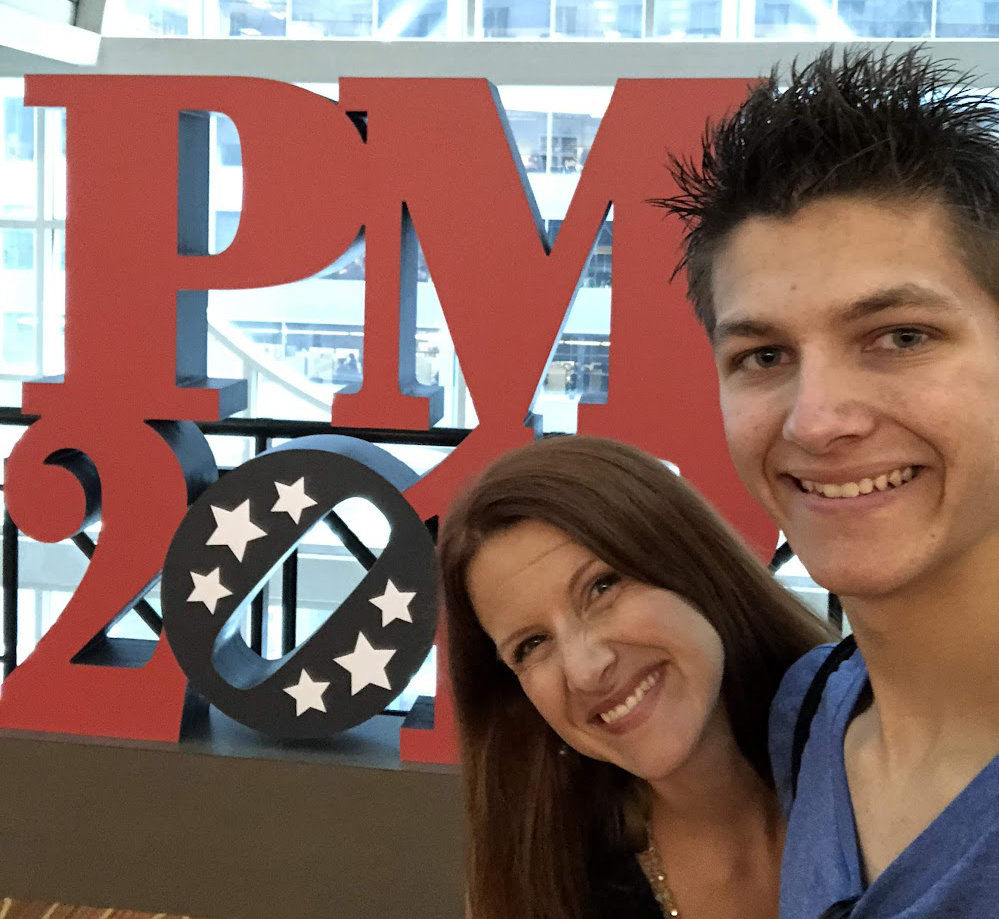 A selfie from the first day of the PM2018 conference where the idea was born.
Why I Built This
After editing for my YouTube channel for multiple years, my Mom reached out to me to see if I would be interested in learning how to edit podcasts for one of her upcoming projects. Of course, I agreed because audio editing can't be too much harder than video editing. So we both got tickets to go to the Podcast Movement 2018 conference.
Initially, I was going to learn about podcast editing and see if it was any different from video editing. My Mom and I decided that it would be best for us to split up, take notes, and then teach each other what we had learned. Mind you, I was the youngest person there by a long shot. I was 16 years old, and I think the next youngest person must have been in the mid-20s. So I joined these discussions talking about building a podcast as a 16-year-old, kinda just chilling out talking to 30 and 40 year olds about their podcast dreams.
After one of these long brainstorming sessions, I started coming up with the idea of making a podcast to teach other young adults about skills that I had learned from reading instead of paying attention to math class. I found that reading business books and time management books were a much more practical use of my time than measuring angles of shapes.
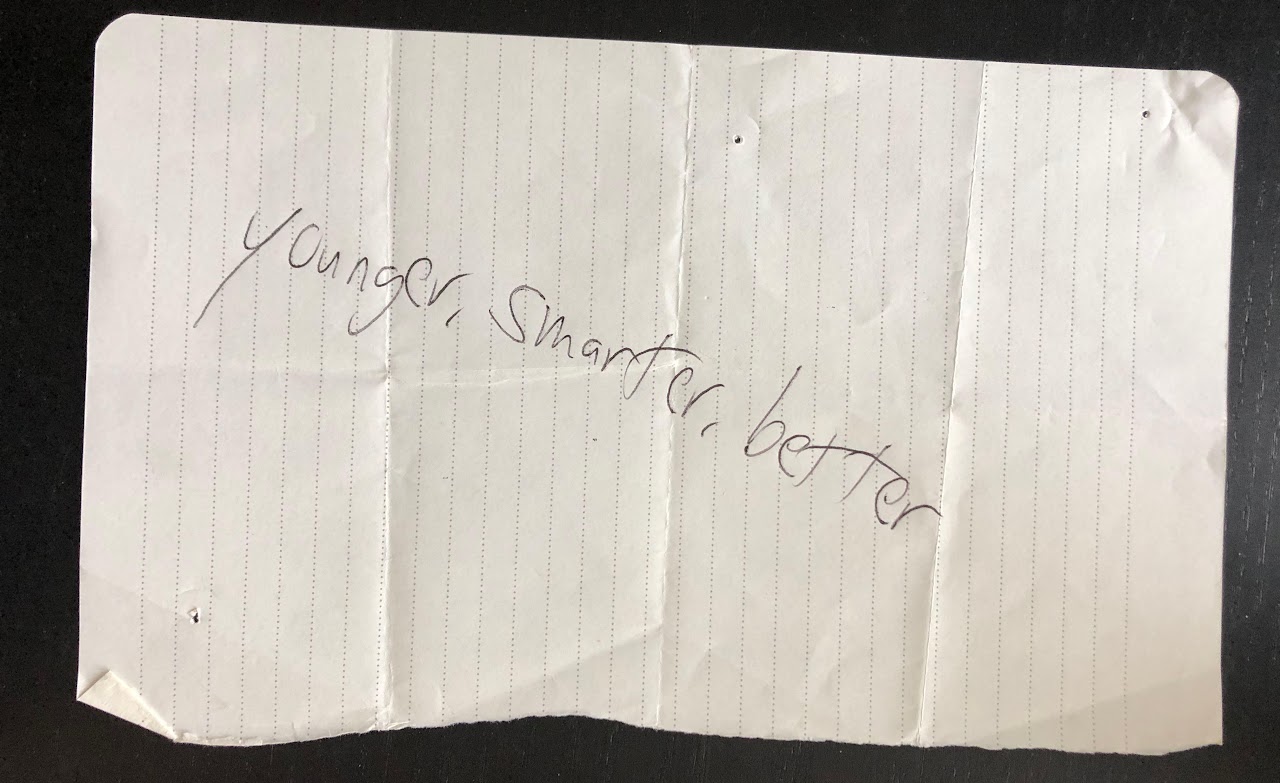 The original note that Justin gave me for a title idea.
How It Works
At the time, I was talking to Justin, who was a teacher who had his own podcast about soft skills, and he came up with the name of Younger Smarter Better. The name stuck, and I decided that I would start taking steps to make the Younger Smarter Better podcast a reality.
Eight days later, I had concept art made for the logo, and one month later, on September 3rd, 2018, I released the first episode of the Younger Smarter Better podcast. Fun fact: This episode was recorded in my uncle's closet with a microphone I accidentally brought with me on our vacation. (Closets are great for recording because the cloth on the walls absorbs the ambient noise)
The podcast production workflow involved researching topics through books and interviews, scripting solo episodes, scheduling and conducting guest interviews, editing audio in Adobe Audition, creating episode artwork, writing show notes, and publishing to podcast platforms. Each episode went through multiple editing passes to ensure quality audio and pacing.
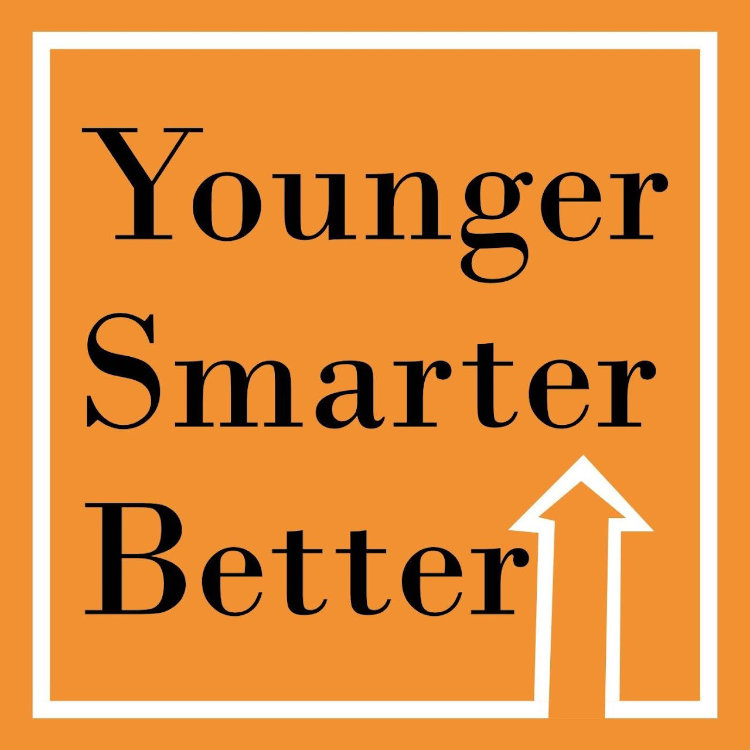 Podcast concept art circa 2018.
Impact
By the numbers:
- 69 episodes published over 2+ years
- Featured interviews with authors, entrepreneurs, and professional athletes
- Available on Apple Podcasts, Spotify, Google Podcasts, and all major platforms
- Built engaged community across Discord and social media (@YSBToday)
What changed:
- Developed confident public speaking and interviewing skills from scratch
- Created a body of work that helps young adults learn practical life skills
- Built discipline through consistent publishing schedule (weekly/biweekly)
- Connected with inspiring mentors and experts I wouldn't have met otherwise
- Gained hands-on experience in content strategy, audio production, and community management
One of my more recent episodes reflecting on some of my lifestyle decisions.
Challenges & Solutions
The biggest challenge was maintaining consistency while balancing school, other projects, and life transitions. I swayed back and forth between making an episode every week, every other week, and taking breaks for months at a time—especially during major life changes like graduating college and moving to a new state.
Another challenge was developing interviewing skills. Early interviews were somewhat awkward as I learned to ask follow-up questions, manage conversation flow, and draw out interesting stories from guests. I improved by studying other interviewers, preparing more thoroughly, and accepting that awkwardness is part of the learning process.
Technical production also had a learning curve. Recording quality varied depending on location (hence recording in closets for better acoustics), and I had to learn audio editing, noise reduction, and how to balance multiple speakers' audio levels. Adobe Audition became my go-to tool, and I developed efficient editing workflows over time.
What I Learned
I learned that teaching is one of the best ways to learn. Researching topics for episodes forced me to deeply understand concepts before explaining them to listeners. I also learned the value of showing up consistently—even imperfect episodes published regularly beat waiting for perfection.
Most importantly, I learned that creating content for peers (rather than trying to sound like an "expert") creates authentic connection. Being honest about my own learning journey made the podcast relatable and built trust with listeners who were on similar paths.
Future improvements:
- Return to regular publishing schedule with more structured content calendar
- Develop interview series focused on specific themes (entrepreneurship, creativity, wellness)
- Create companion resources (show notes templates, book lists, action guides) for each episode
- Expand community engagement with Q&A episodes and listener challenges
- Experiment with video podcast format for YouTube distribution
Links
- Listen: Available on Apple Podcasts, Spotify, Google Podcasts, and all major platforms
- Social: Instagram @YSBToday
- Community: Discord server for listeners