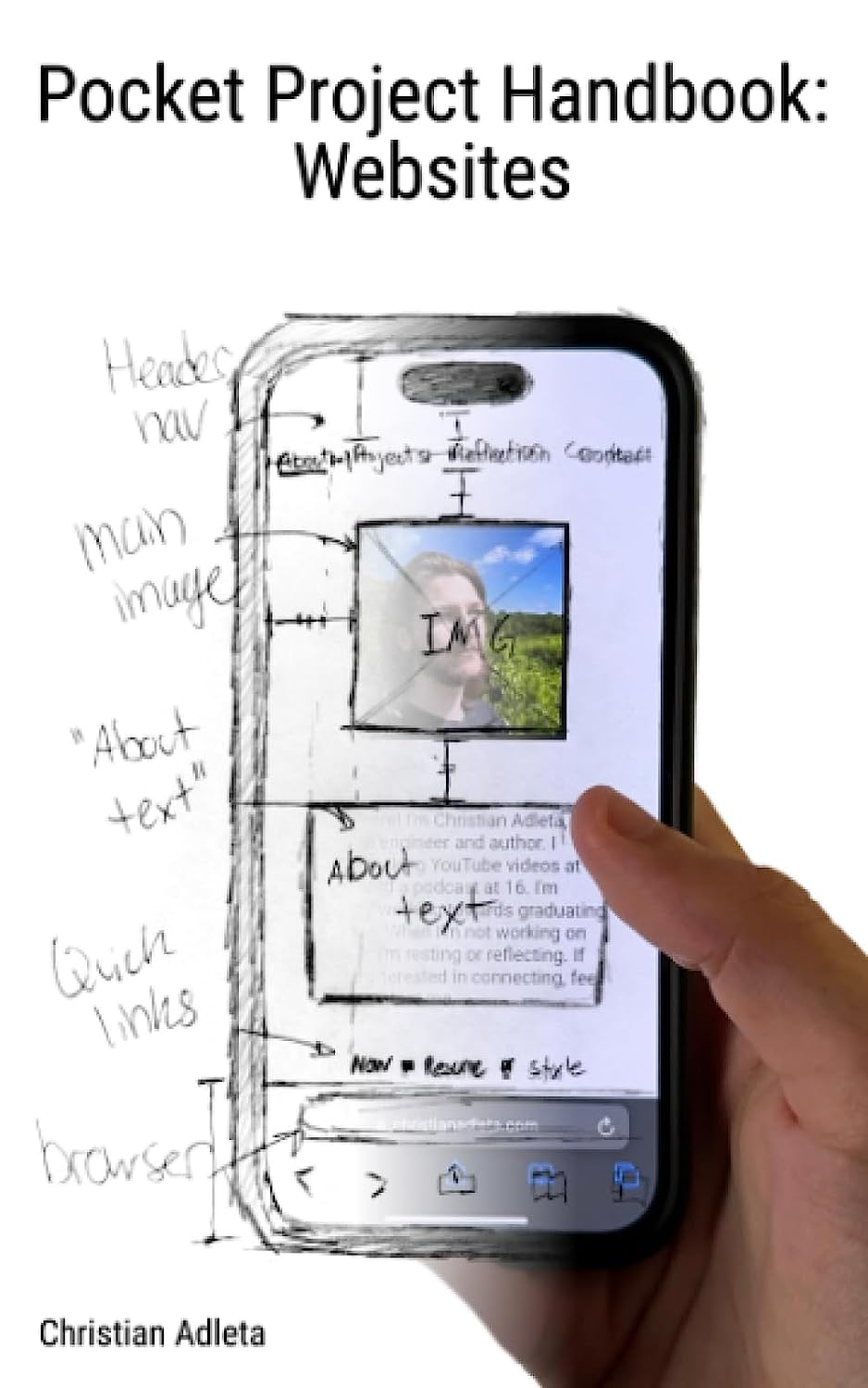
What It Covers
- Four-part framework for project creation from ideation to execution
- Strategic planning: defining goals, analyzing competitors, understanding users
- Project scoping: task flows, feature brainstorming, MVP definition, roadmap creation
- Project structure: standards, information architecture, data modeling, style guides
- Iterative cycles: sprint planning, wireframes, frontend/backend development, QA
- Practical templates for user stories, task flows, and completion criteria
- Emphasis on accessibility, responsiveness, and error handling
Why I Wrote This
I originally created this guidebook as a reference for the process I was using to create small projects. It started as personal documentation—a way to systematize my approach to building timers, productivity tools, and eventually full-stack web applications. As I refined my process over 4+ years of building projects, these notes slowly grew into their own project.
The problem I kept facing was the gap between knowing how to code and knowing how to build a complete project. I could write functions and design interfaces, but weaving those skills together into a cohesive development process felt overwhelming. I needed a skeleton structure—a lightweight guide that captured the essential 20% of steps that would get me 80% of the way there.
This book is designed to be deliberately light yet effective. I've purged all filler content and focused on concise tricks and actionable steps. Think of it as a framework you fill with your own projects and ideas, not a prescriptive recipe you must follow exactly.
How It's Structured
Part I: Project Strategy begins with elevator pitches and 10 critical pre-project questions. You'll define project goals, analyze competitors, create user templates, and set SMART goals with measurable success metrics. This section ensures you're building the right thing before you build anything.
Part II: Project Scoping guides you through task flow analysis, brainstorming features, writing broad user stories, and prioritizing using importance/feasibility matrices. You'll define your MVP and create a project roadmap that breaks down development into manageable phases.
Part III: Project Structure covers setting coding standards, designing information architecture, high-level data modeling, creating style guides, and writing website content. This foundation prevents technical debt and ensures consistency across your project.
Part IV: Iterative Cycles is where theory meets practice. Each sprint involves planning, defining completion criteria, identifying components, sketching ideas, creating wireframes, building frontend/backend, ensuring responsiveness and accessibility, handling errors gracefully, and conducting thorough QA. The section concludes with sprint reviews to capture lessons learned.
Impact
By the numbers:
- 127 pages of focused, actionable content
- 8 templates included for immediate use
- Distilled from 4+ years of project development experience
- Published June 2023 on Amazon
What changed:
- Gave structure to my chaotic project development process
- Reduced time spent wondering "what comes next?" during development
- Created a reusable framework for all future projects
- Transformed tacit knowledge into explicit, shareable procedures
- Helped me think more critically about design decisions
Challenges & Solutions
The hardest part was resisting the urge to include everything. Every piece of advice, every technique, every consideration felt important. But comprehensive guides aren't practical—they're overwhelming. I had to ruthlessly cut content that didn't prove its worth through repeated use.
I also struggled with making the book specific enough to be useful but general enough to apply across different projects. The solution was to include occasional examples from projects I was working on at the time, showing how the framework adapts to real situations without being prescriptive.
Finally, accepting that this book would quickly become outdated was liberating. Instead of trying to create the definitive guide, I published a snapshot of my current understanding—a living document I could revise as I continued building projects.
What I Learned
Writing this book taught me that process documentation is its own skill. Describing what you do intuitively forces you to examine whether each step actually adds value. Many steps I thought were essential turned out to be optional or context-dependent.
I also learned that the best guides are skeletal frameworks, not detailed recipes. Developers and designers need structure, not scripts. The goal is to provide decision points and considerations, then trust the reader to adapt them to their specific situation.
Future improvements:
- Expand examples to include mobile app development and API-first projects
- Add a section on solo developer workflows vs. team collaboration
- Include case studies showing the framework applied to real projects start-to-finish
- Create a companion website with interactive templates and checklists
- Update with lessons learned from additional years of project development
Links
- Amazon: Pocket Project Handbook: Websites
- ISBN: 9798398728019
- Related: The Mental Toolbox (1st Edition) — another procedural reference guide