What It Contains
- Four transformative cognitive tools designed for sustainable performance
- Focus: Preparing, focusing, and resting effectively to prevent burnout
- Productivity: Balanced approach between GTD's capture system and Pull System's finite limits
- Reading: Speed reading strategies combined with deep comprehension techniques
- Writing: Embrace the crappy first draft and the process of rewriting
- Physical procedures you can follow along with to reduce mental overhead
- Each tool designed with sustainability in mind, enabling peak performance without burnout
Why I Built This
Every time I sat down to do something hard, I asked the same questions: It shouldn't be this hard to focus, right? I bet there is a better way to do this. Why isn't there a simple set of instructions for doing this?
These questions became incessant when I began writing what I believed would be my second book, The Learning Framework. But I couldn't finish the first draft—I needed to research and perfect my systems first. I decided to dedicate a few months to researching and perfecting a system for getting into, and maintaining, a state of focus.
As I documented my process, I discovered the benefit of having a paperback procedure I could just follow along with. Having a physical copy allowed me to breeze through the system without dedicating mental effort to managing it. All the brain power needed to run the system was on the page—I just had to follow along.
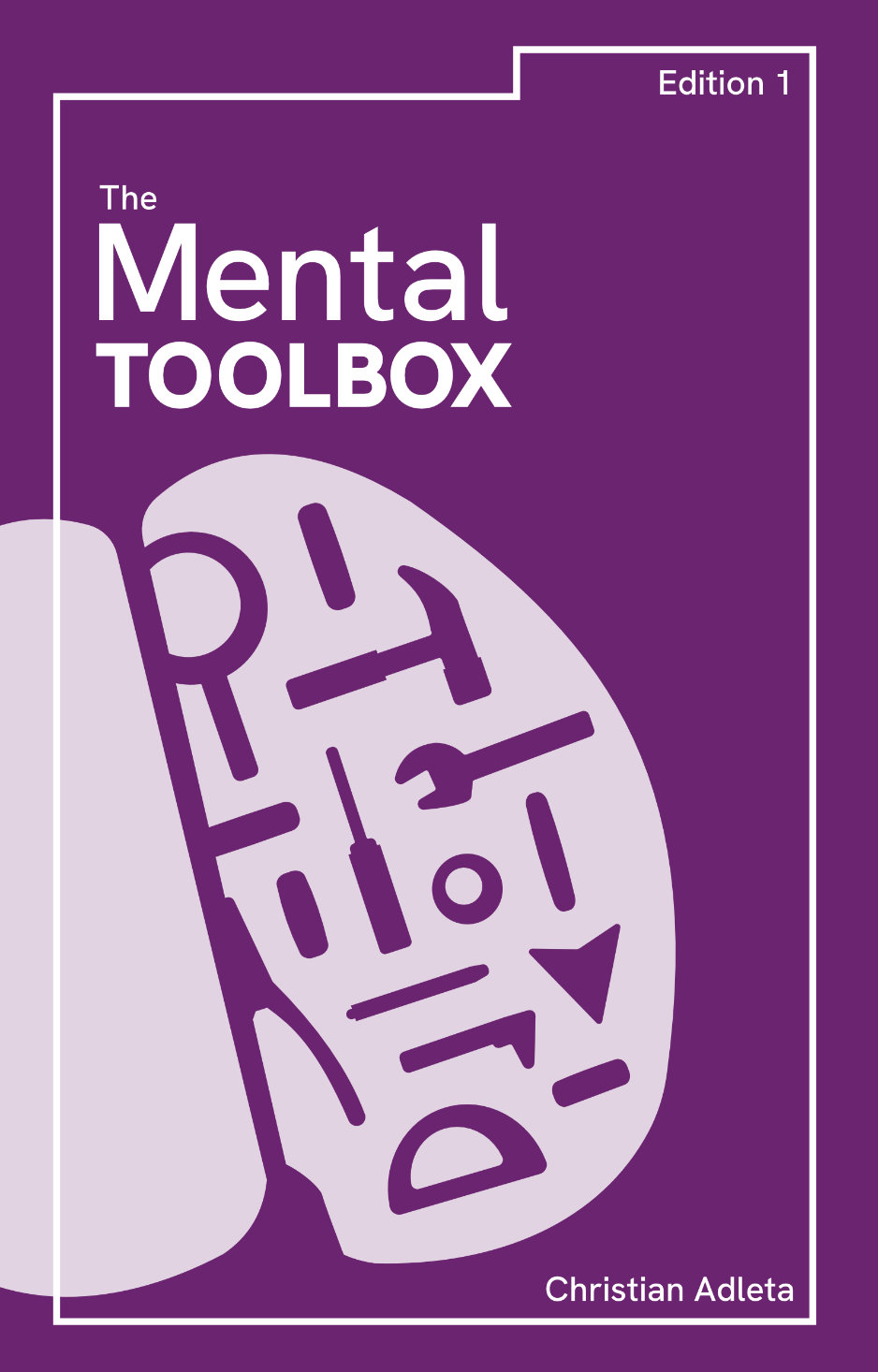
Then I encountered a revolutionary insight from Scott H. Young's Get Better At Anything: "The mind is a collection of tools, built out of knowledge. Each tool may be specific, but in total they can add up to sophisticated abilities." This profound realization led me to pause work on The Learning Framework completely and start The Mental Toolbox.
The Four Tools
Focus: This set of procedures helps you concentrate on tasks while preventing burnout. It involves three steps: preparing, focusing, and resting effectively to recover focus energy. The key idea is sustainability—the ability to focus over an entire day or multiple days in a row. If mindfulness is the space that restores focus, then burnout is the void that consumes your ability to concentrate.
Productivity: These procedures describe my rules for productivity and my end-of-week and end-of-day routines. They're inspired by two opposing systems: David Allen's Getting Things Done (GTD), which focuses on capturing everything in mental nets and organizing it for clarity, and Cal Newport's Slow Productivity and Oliver Burkeman's Pull System, which emphasize finite project lists reflecting our limited energy. I've found a middle ground—a balance of taking in priorities, clearly communicating expectations, and knowing how much you can reasonably accomplish to avoid burnout.
Reading: This combines speed reading strategies with techniques for deep comprehension. The key is adapting which techniques you use and which steps you follow based on your goal for each book. It's designed for studying non-fiction, not leisure reading (unless you're like me and study non-fiction for fun).
Writing: This embraces the idea of a crappy first draft and that writing is the process of rewriting. It walks through planning and gathering ideas before you start writing, then how to open the hose of words, and finally how to sort through the mud of word soup for nuggets of ideas to keep in the next revision.
Impact
By the numbers:
- Published September 2024 on Amazon
- ISBN: 9798336913965
- Edited by Ashtyn Faye, illustrations by Eyla Stumbaugh
- Four tools distilled from years of research and experimentation
What changed:
- Eliminated the mental overhead of managing focus and productivity systems
- Created physical procedures I could follow along with during demanding work
- Shifted perspective from "the brain is a muscle" to "the mind is a collection of tools"
- Established a foundation for future editions with more tools
- Transformed implicit knowledge into explicit, repeatable procedures
Challenges & Solutions
The hardest challenge was testing each step to ensure it worked. During earlier revisions, I found myself skipping steps completely or skipping parts of the process. Each step had to prove its worth—some were only valuable in specific situations, and those nuances needed documentation.
I also had to accept that this book is a living document that will quickly become outdated. Rather than waiting for perfection, I decided to release editions on a consistent six-month schedule. This forces me to publish new changes and additions regardless of whether they meet my ideal vision.
Finally, condensing centuries of advice and research into simple, practical procedures required ruthless editing. Most information is bloated; complex ideas aren't practical. I had to translate vast amounts of information into just the necessary considerations in a simple, usable, systematic form.
What I Learned
I learned that the best productivity tools remove mental overhead rather than add features. When all the brain power needed to run a system is on the page, you can dedicate your full mental capacity to the actual work.
I also learned that forcing yourself to write down a process reveals which steps are truly essential and which are just habits. Many procedures I thought were critical turned out to be optional or context-dependent.
Most importantly, I learned to embrace imperfection and iteration. This book is a peak I intend to reach one edition at a time, as slowly as I need to, for as long as I need to. Maybe we'll see the view together one day.
What came next:
- Second edition (March 2025) expanded to eight tools
- Added Critical Thinking, Habits, Learning, and Monthly Procedures sections
- Introduced a new Checklists format for even lighter, faster reference
- Continued using and reflecting on these procedures daily
Links
- Amazon: The Mental Toolbox (1st Edition)
- ISBN: 9798336913965
- Next Edition: The Mental Toolbox v2 (2nd Edition)
- Related: Pocket Project Handbook — another procedural reference guide